
Hacker Services: What’s Legal, What’s Not, and How to Choose an Ethical Hacker
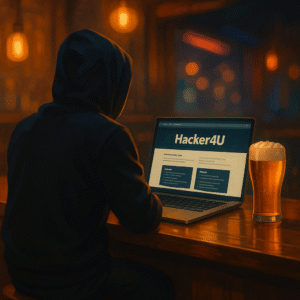 The phrase “hacker services” sounds simple, but it can describe two very different realities. The first is legal: security audits, penetration testing under contract, account protection, and incident response. The second is criminal: hacking third-party systems, bypassing security controls, and stealing data. Below is a practical guide to distinguishing an ethical (white-hat) hacker from a scammer and correctly defining your task so the problem can be solved legally.
What Is a White-Hat or Ethical Hacker?
An ethical hacker is a cybersecurity professional who identifies vulnerabilities and helps remediate them with the owner’s authorization. Authorization is the key requirement. If someone does not have your permissions, access rights, or documentation and promises to “do everything without leaving a trace,” that is not legitimate hacker services — it is illegal activity and a risk to you.
Which Hacker Services Are Legal?
- Website and infrastructure penetration testing under a contract and written authorization, with an agreed scope, timeline, report, and verification of fixes.
- Security audits: configurations, access rights, password policies, 2FA, backup codes, and user permissions.
- Incident response: determining what happened, stopping a leak, recovering systems, and preventing recurrence.
- Account and messaging security: 2FA configuration, login review, termination of active sessions, and phishing protection.
- Account recovery for your own accounts when ownership can be verified, using the service’s official recovery procedures.
- OSINT (open-source intelligence) within the law: risk analysis, data-leak checks, and reputational threat assessment.
- Removal or de-indexing of sensitive information through legal mechanisms and appropriate requests.
What Is Illegal — and Why Is It Dangerous for You?
- Hacking someone else’s accounts, websites, cameras, email, or social media.
- Bypassing security controls or obtaining access without the owner’s permission.
- Buying or selling leaked databases, stolen data, or malware.
- Promises to “remove information from anywhere within an hour” without a legal basis.
Even if someone presents this as a “service,” you are taking the risk: financial loss, exposure of your own data, blackmail, and potentially criminal liability.
How to Recognize an Ethical Cybersecurity Professional
- They immediately discuss legality and the need to verify ownership or authorization.
- They define the scope of work: what will and will not be done, deadlines, and the reporting format.
- They do not promise magic such as “I can hack anything.” They discuss risks, probabilities, and verifiable steps.
- They work under a contract and can use an NDA when required.
- They provide a clear result: a report, vulnerability list, priorities, recommendations, and verification of fixes.
- They do not request unrestricted access to everything without explanation or risk minimization.
Red Flags
- “I’ll do it quietly and nobody will know.”
- “No documents or proof are required.”
- “Pay first — there will be no details.”
- A request to install unknown software or browser extensions “for the job” without an explanation.
- An unrealistically low fixed price “for everything” or “for access to any account.”
What to Prepare Before Contacting a Specialist
To resolve the issue quickly and efficiently, prepare the minimum necessary information:
- What happened: when you noticed the problem and what symptoms you observed, such as logins, emails, or notifications.
- What access remains: phone number, recovery email, second factor, or backup codes.
- Which devices were used: phone or computer, browsers, and approximate dates.
- Proof of ownership: receipts, correspondence, profile information, or anything else the service may request.
- Your goal: recover access, terminate sessions, strengthen security, conduct an audit, and so on.
What a Proper Engagement Looks Like
- Assessment: determine the type of problem — compromise, forgotten password, suspension, or data leak.
- Scope agreement: define what will be done, what information is required, the timeline, and the cost.
- Work: only lawful and agreed actions are performed.
- Report/result: a list of actions, recommendations, and a security plan.
- Prevention: 2FA, backup codes, password manager, and device security hygiene.
How Much Do Legal Hacker Services Cost?
Pricing depends on the task and urgency. Penetration testing and security audits are generally priced according to scope, such as the number of systems, pages, and integrations. Account recovery depends on the service and the available proof of ownership. If someone promises access to “any account for a fixed price,” it is almost always a scam or criminal activity.
Frequently Asked Questions
Can access be restored if an attacker changed the password and recovery email?
Sometimes, yes, but only through the service’s official recovery procedures and with proof of ownership. There is no legitimate way to solve this by “bypassing” the platform.
Can information be removed from the internet?
The legal approach involves formal requests, de-indexing, working with platforms, and reputation management. Promises to “remove everything everywhere within an hour” are almost always fraudulent.
Can you help remotely?
Yes. Most account, security, and initial assessment tasks can be handled remotely while maintaining confidentiality.
How to Get Help
If you need an ethical hacker, contact me with a brief description of the situation and what access you still have. I work only legally, under contract and with an NDA, without questionable methods.
Contact:
Phone/WhatsApp: +972 54-505-3535 ·
WhatsApp ·
Telegram: @hacker4u_ru ·
E-mail: [email protected]
Read also: Security Audit · Penetration Testing · Account Recovery · Account Security and 2FA · Incident Response

